WASHINGTON – Leading Republicans are joining a push to reconsider the constitutional amendment that grants automatic citizenship to people born in the United States.
Senate Republican leader Mitch McConnell of Kentucky said Tuesday he supports holding hearings on the 14th Amendment right, although he emphasized that Washington’s immigration focus should remain on border security.
His comments came after other Republicans recently questioned or challenged birthright citizenship, embracing a cause that had largely been confined to the far right.
The senators include Arizona’s John McCain, the party’s 2008 presidential nominee; Arizona’s Jon Kyl, the GOP whip; Alabama’s Jeff Sessions, the top Republican on the Judiciary Committee; and Lindsey Graham of South Carolina, a leading negotiator on immigration legislation.
“I’m not sure exactly what the drafters of the (14th) amendment had in mind, but I doubt it was that somebody could fly in from Brazil and have a child and fly back home with that child, and that child is forever an American citizen,” Sessions said.
More below the fold. As I’m sure most Blenders know, the Fourteenth Amendment addresses racial inequities that were endemic to the Confederate states before and during the Civil War. At issue here is Section 1, which reads:
All persons born or naturalized in the United States, and subject to the jurisdiction thereof, are citizens of the United States and of the State wherein they reside. No State shall make or enforce any law which shall abridge the privileges or immunities of citizens of the United States; nor shall any State deprive any person of life, liberty, or property, without due process of law; nor deny to any person within its jurisdiction the equal protection of the laws.
This is very easy to understand: all persons born in the United States are citizens, all citizens are entitled to all the rights and protections of the Constitution, and no person — citizen or not — within a jurisdiction of US law shall be denied equal protection under the law.
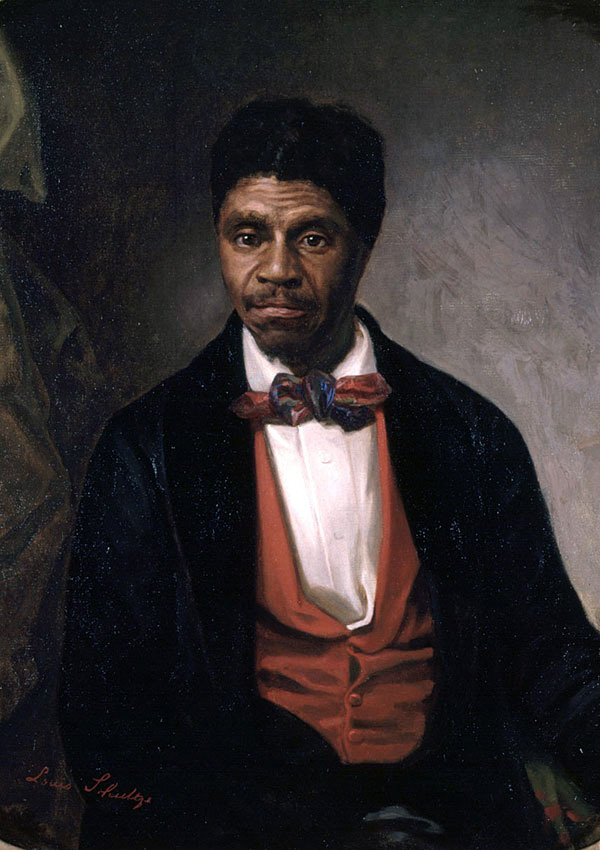
This text was a direct response to the 1858 Supreme Court ruling, Dred Scott v. Sandford. The Dred Scott ruling held that Africans who had been imported into the United States as slaves, and their descendants, were not citizens and therefore had no right to protection under the law and no standing to sue for their rights in any court. Further, it held that slaves were chattel, and that laws designed to free slaves amounted to illegal seizure of property and therefore unconstitutional. This is what the “honored gentleman” from Alabama has publicly expressed ignorance about. Not surprising, given Sessions well documented racist past.
The repeal of birthright citizenship would open the doors for a return to racial or bloodline based citizenship. More, it creates the possibility — the likelihood? — that other restrictions on citizenship could be imposed. “Congress shall make no law respecting an establishment of religion, or prohibiting the free exercise thereof….” But might it be constitutional for Congress to say that only adherents of a particular religion had the rights of citizenship, as long as religion was neither imposed or restricted?
To provide the best experiences, we use technologies like cookies to store and/or access device information. Consenting to these technologies will allow us to process data such as browsing behavior or unique IDs on this site. Not consenting or withdrawing consent, may adversely affect certain features and functions.
Functional
Always active
The technical storage or access is strictly necessary for the legitimate purpose of enabling the use of a specific service explicitly requested by the subscriber or user, or for the sole purpose of carrying out the transmission of a communication over an electronic communications network.
Preferences
The technical storage or access is necessary for the legitimate purpose of storing preferences that are not requested by the subscriber or user.
Statistics
The technical storage or access that is used exclusively for statistical purposes.The technical storage or access that is used exclusively for anonymous statistical purposes. Without a subpoena, voluntary compliance on the part of your Internet Service Provider, or additional records from a third party, information stored or retrieved for this purpose alone cannot usually be used to identify you.
Marketing
The technical storage or access is required to create user profiles to send advertising, or to track the user on a website or across several websites for similar marketing purposes.